
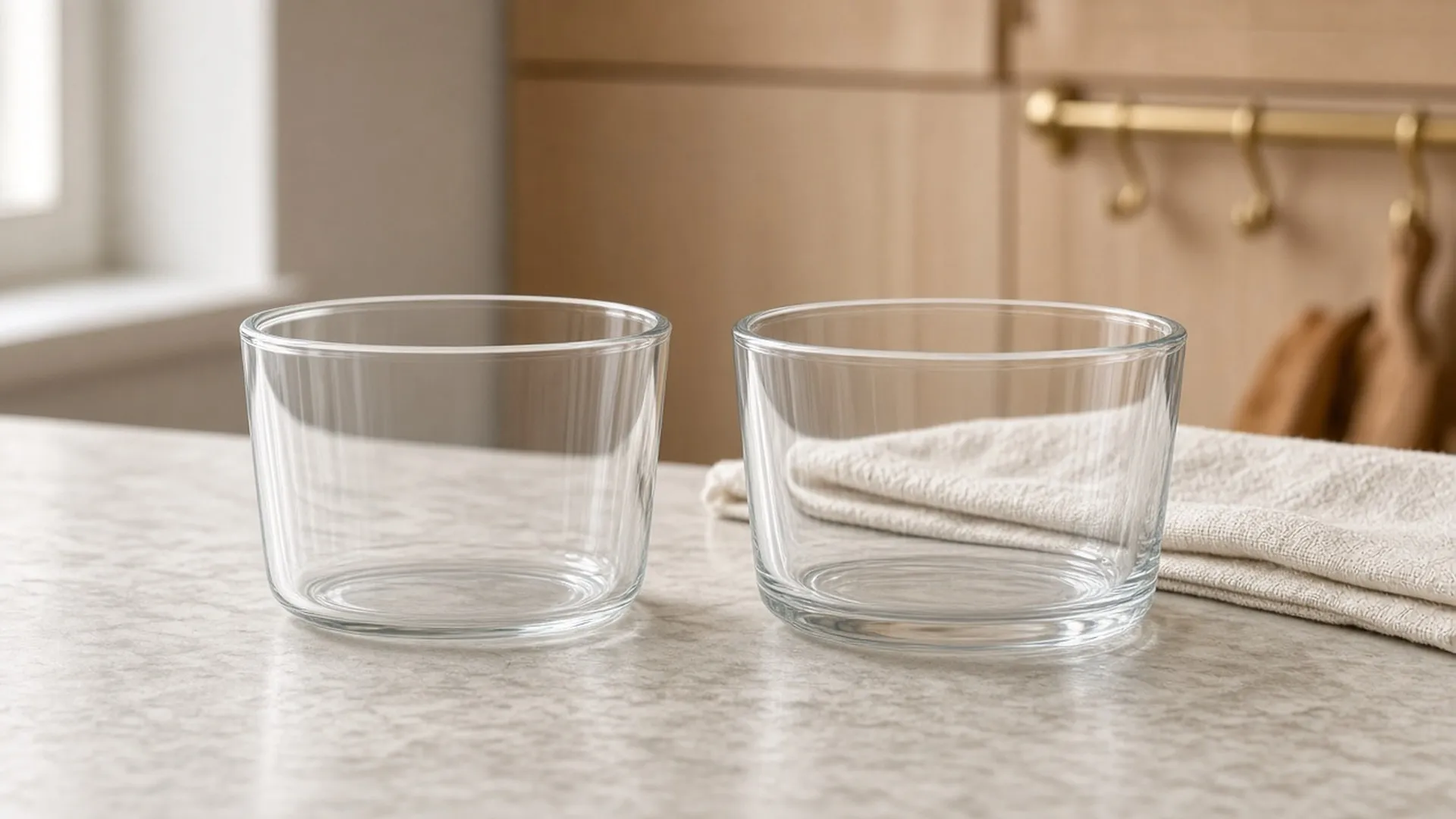
Borosilicate vs soda-lime glass
Two types of glass are common in food containers. Here is how they differ and what the label should tell you.
Disclosure: We may earn a commission if you buy through links on this page. It does not change what we recommend. Affiliate Disclosure
Soda-lime glass
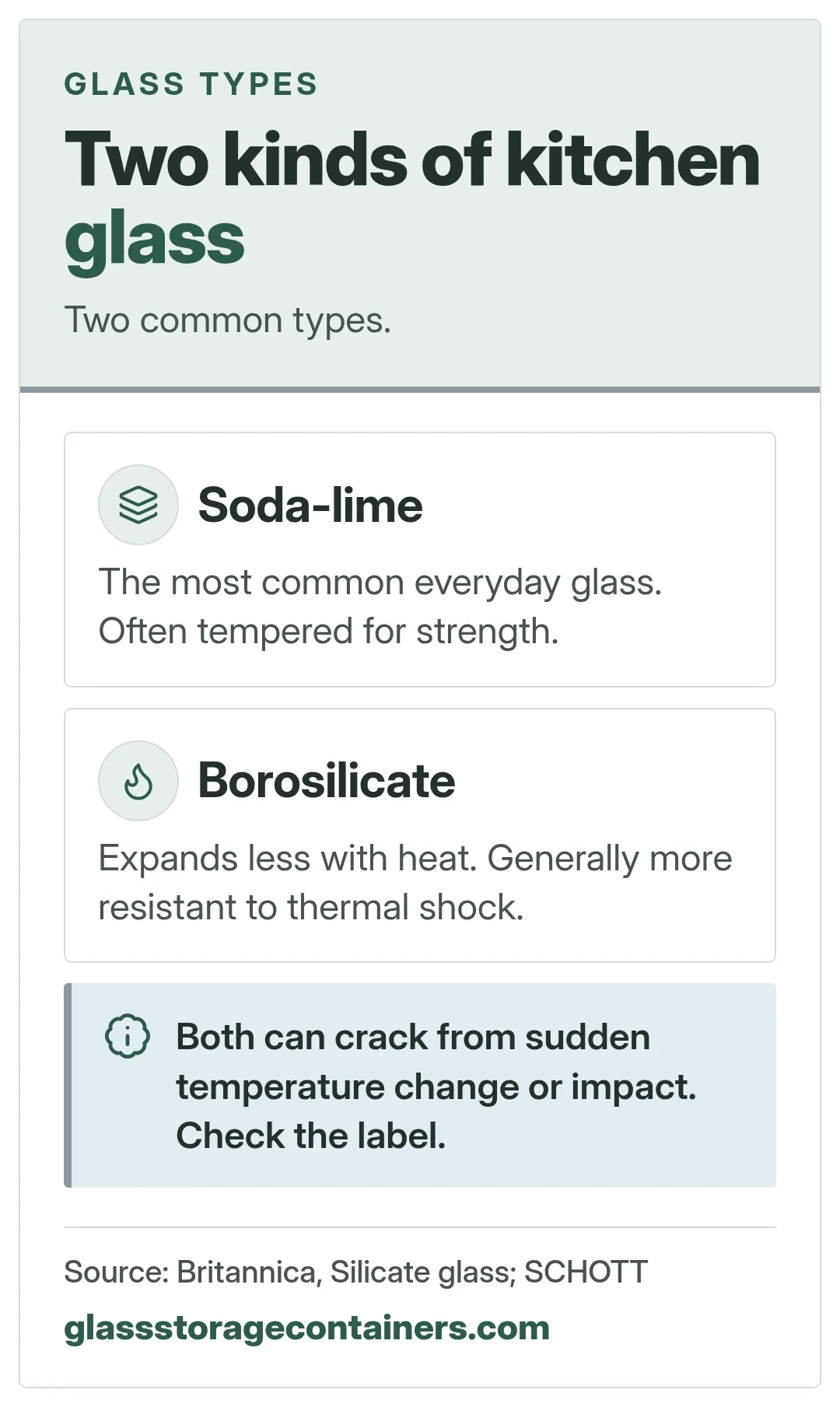
Soda-lime glass is the most common glass in everyday use, from windows to jars. Many food containers use soda-lime glass, often tempered, which means it was heat treated to make it stronger.
Borosilicate glass
Borosilicate glass contains boron oxide. It expands less when heated, which is why it is used where high resistance to thermal shock is wanted, such as laboratory glassware. Some kitchen containers are made from it.
What that means in practice
Borosilicate glass is generally more resistant to cracking from sudden temperature changes than ordinary soda-lime glass. That does not make any container immune. Both types can crack from sudden temperature changes or impact. The maker's instructions tell you what a specific container is designed for.
Tempered glass
Tempering is a heat treatment that makes glass stronger. It is a treatment, not a separate glass type, and tempered glass can still crack or break.
Reading the label
- Look for the glass type the maker states, if any.
- Look for the maker's oven, microwave, freezer, and dishwasher instructions.
- If the glass type is not stated, ask the maker.
FAQ
General information only. Follow the maker's instructions for oven, microwave, freezer, and dishwasher use. Glass can crack or break from sudden temperature changes or impact. For food safety, follow USDA and FDA guidance.
Related guides
Now the lid
Lids decide sealing and where a container can go.
