
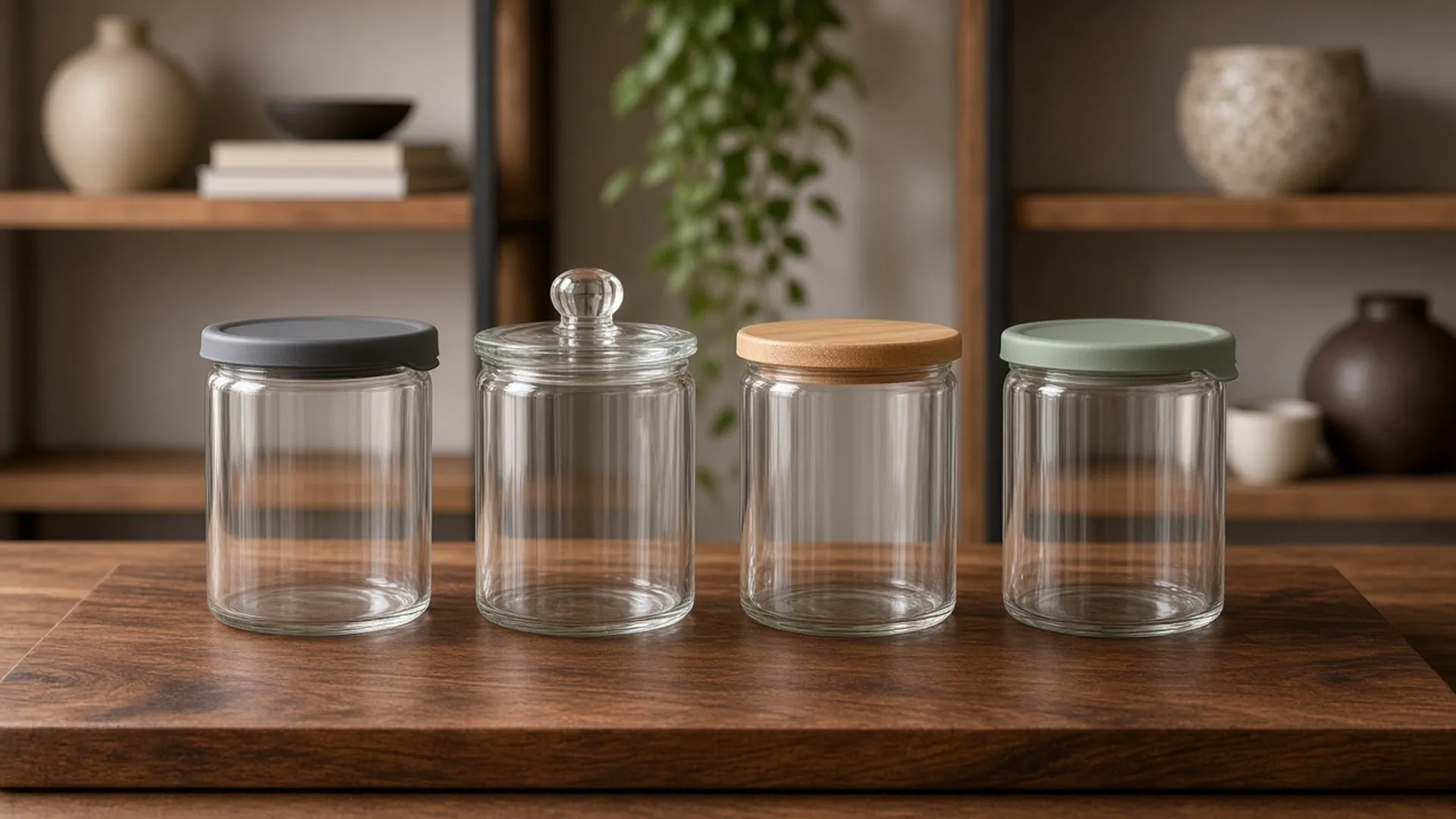
Lids for glass containers
The glass may go in the oven while the lid does not. Here is what to know about each lid type.
Disclosure: We may earn a commission if you buy through links on this page. It does not change what we recommend. Affiliate Disclosure
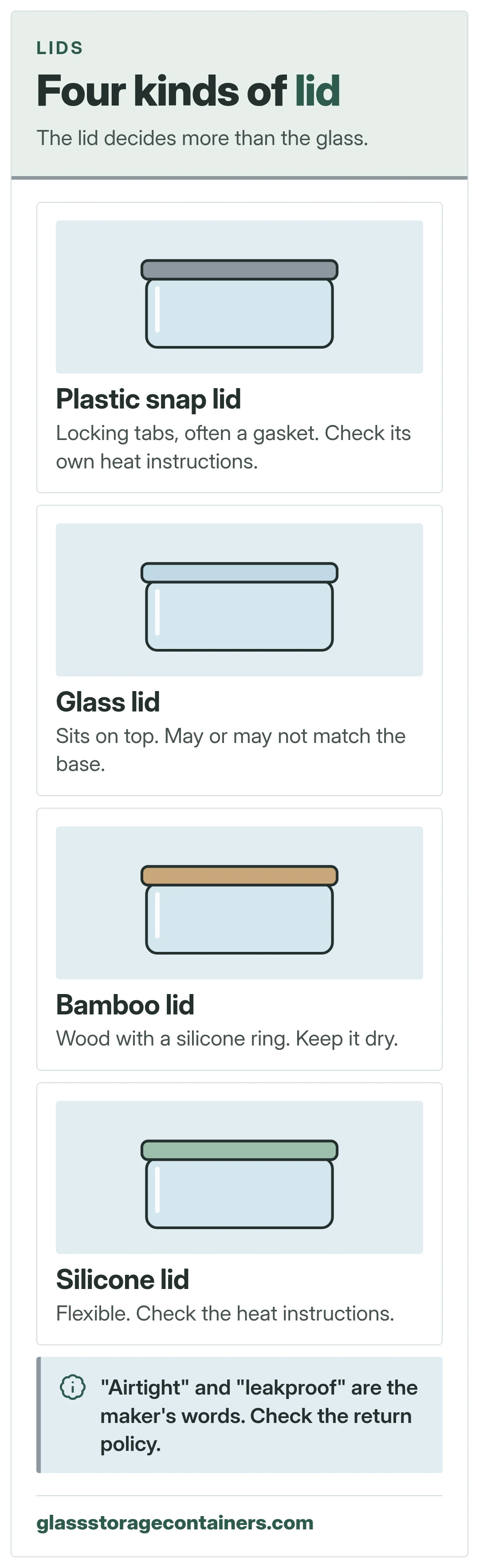
Plastic snap lids
Common on meal prep and storage sets, usually with locking tabs and a silicone gasket. Lids and bases often have different heat instructions. Check the maker's instructions for the lid separately.
Glass lids
A glass lid sits on top, sometimes with a gasket or vent. Heat and cold instructions may match the base or not. Check.
Bamboo lids
Wood lids, usually with a silicone ring, often used for pantry storage. Wood and water do not mix well, so check the maker's cleaning instructions.
Silicone lids
Flexible covers or stretch lids. Check the maker's heat instructions.
Seals and gaskets
Removable gaskets help a lid seal. Take them out to clean them so food and moisture do not collect underneath.
Words on the box
"Airtight" and "leakproof" are maker descriptions. Treat them as the maker's claim and check the return policy.
FAQ
General information only. Follow the maker's instructions for oven, microwave, freezer, and dishwasher use. Glass can crack or break from sudden temperature changes or impact. For food safety, follow USDA and FDA guidance.
Related guides
Sizes and shapes
Choose shapes that stack and fit your fridge.
