
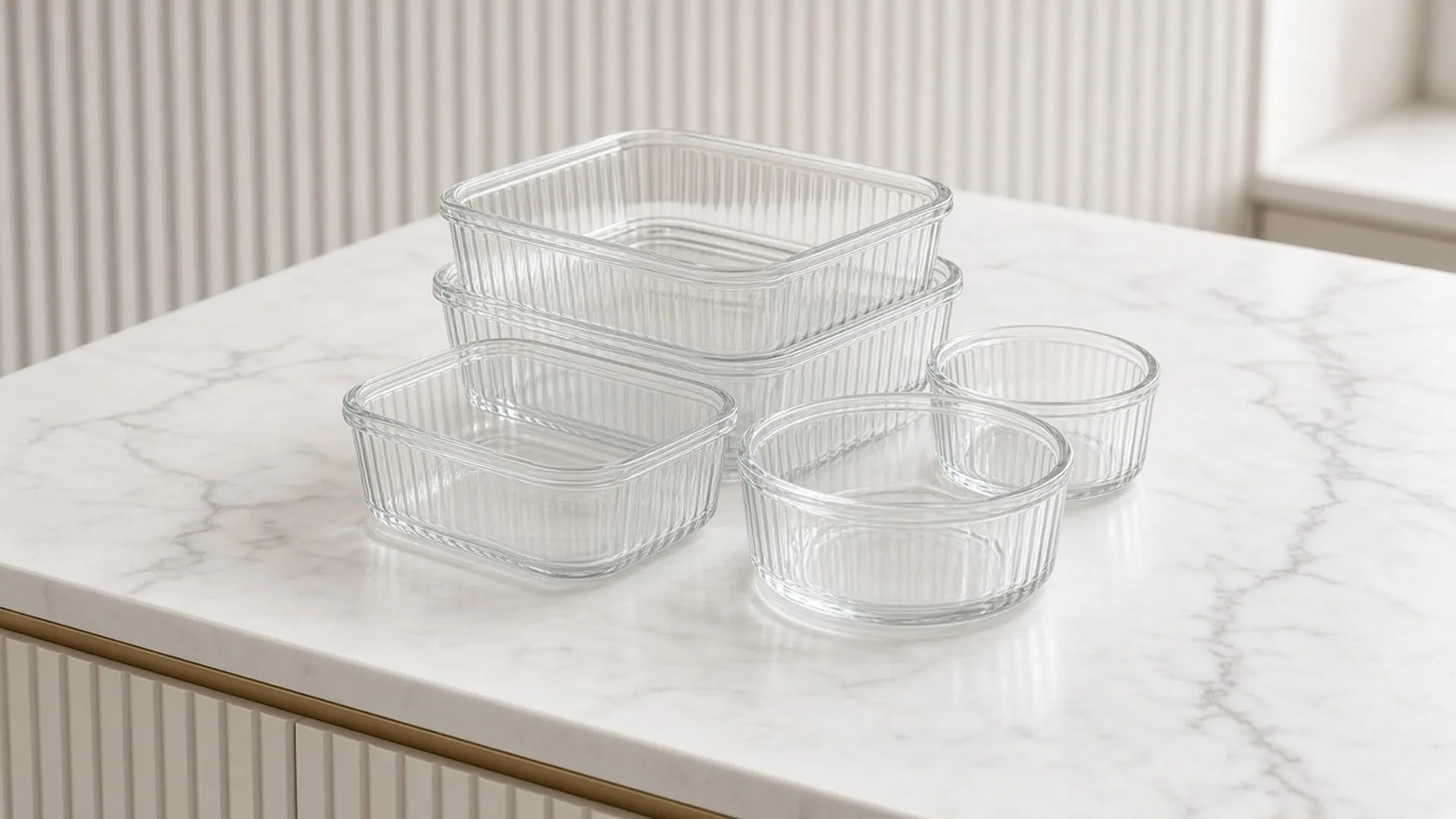
Choosing sizes and shapes
The right mix depends on what you cook and where it goes. Here is how to plan a set.
Disclosure: We may earn a commission if you buy through links on this page. It does not change what we recommend. Affiliate Disclosure
Shapes
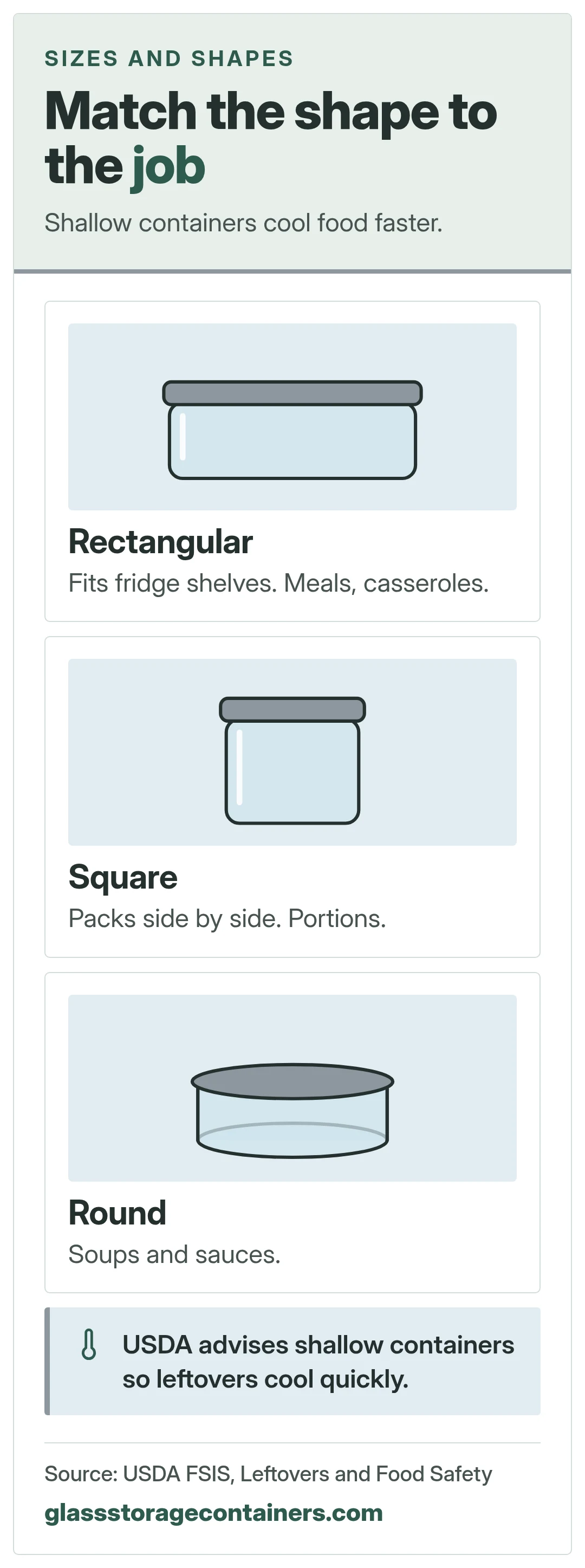
- Rectangular. Fits fridge shelves well and suits meals and casseroles.
- Square. Packs tightly side by side and suits portions.
- Round. Suits soups, sauces, and stirring.
Shallow beats deep for leftovers
USDA advises dividing large amounts of food into shallow containers so it cools quickly. Several shallow containers often work better than one deep one.
Stacking and nesting
Same-footprint containers stack in the fridge. Nesting sets save cupboard space. Lids that share a size reduce clutter.
Planning a set
1. List what you store most: leftovers, lunches, pantry goods, freezer meals. 2. Match shapes to each use. 3. Check the capacity the maker lists, in the units you cook with. 4. Measure the shelf height of your fridge and cupboard.
FAQ
General information only. Follow the maker's instructions for oven, microwave, freezer, and dishwasher use. Glass can crack or break from sudden temperature changes or impact. For food safety, follow USDA and FDA guidance.
Related guides
Glass or something else?
How glass compares with plastic and stainless steel.
