
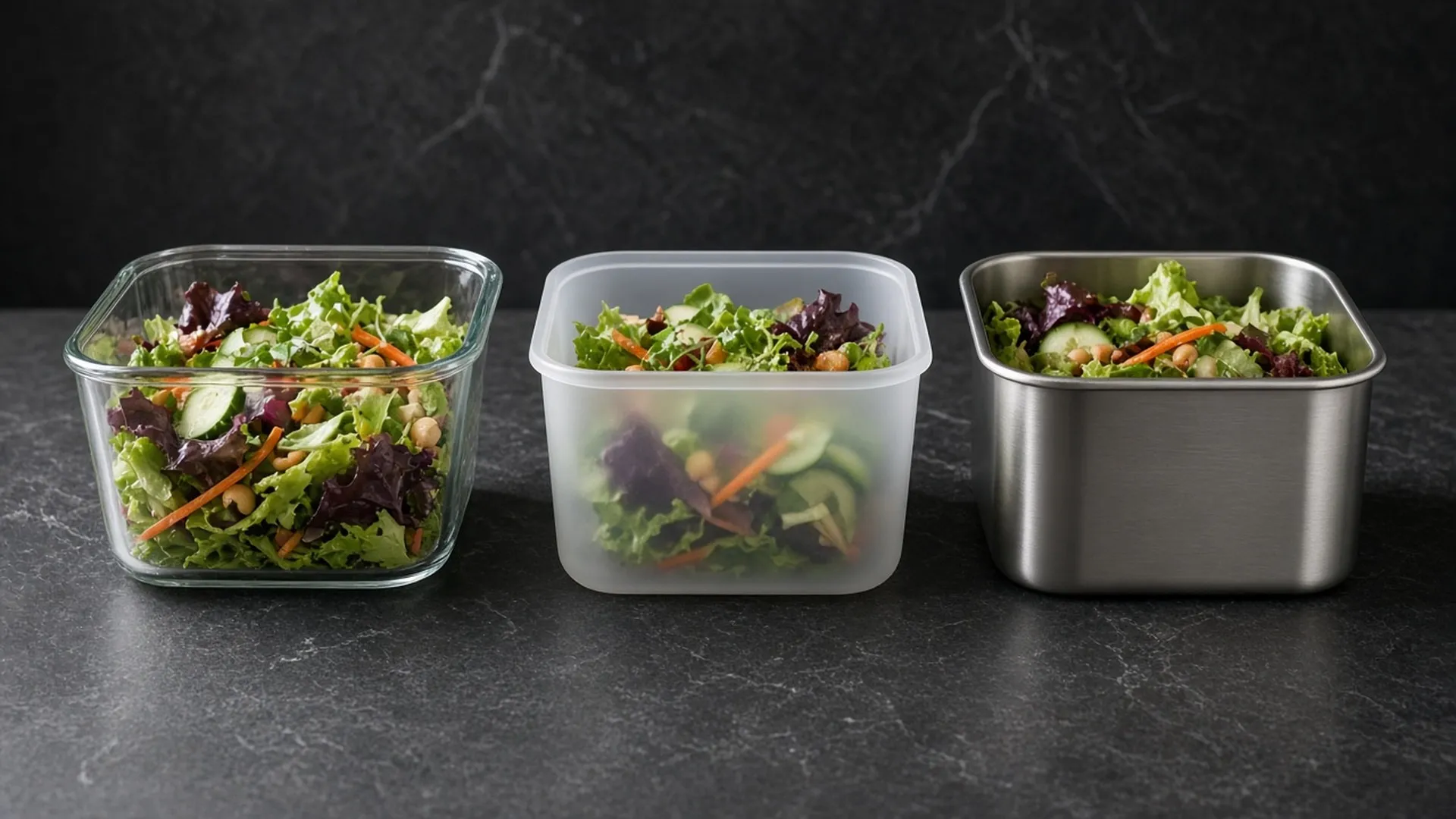
Glass vs plastic vs stainless steel
Each material has real tradeoffs. Here they are side by side, without the marketing.
Disclosure: We may earn a commission if you buy through links on this page. It does not change what we recommend. Affiliate Disclosure
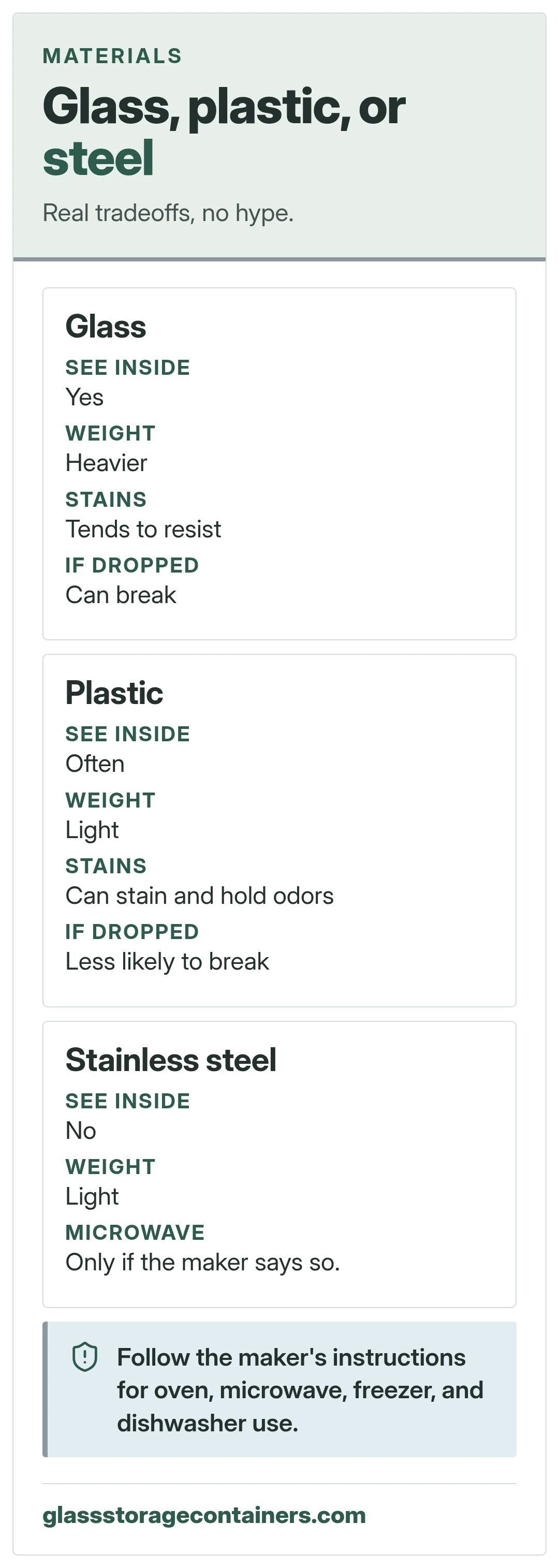
Glass
- See-through, so you can see what is inside.
- Heavier, and can break if dropped.
- Tends to resist staining and odors better than plastic.
- Oven or microwave use depends on the maker's instructions.
Plastic
- Light and less likely to break if dropped.
- Can stain or hold odors, especially with tomato sauces and oily foods.
- Heat use depends on the maker's instructions.
Stainless steel
- Light and durable.
- Not see-through.
- Not for the microwave unless the maker says it can go in the microwave.
Which suits you
- You reheat at work: check the maker's microwave instructions for each material.
- You carry lunches: weight matters, consider plastic or steel.
- You want to see contents: glass.
FAQ
It depends on your use. Each has tradeoffs.
We do not make chemical claims. Check the maker's information.
Check the maker's instructions.
General information only. Follow the maker's instructions for oven, microwave, freezer, and dishwasher use. Glass can crack or break from sudden temperature changes or impact. For food safety, follow USDA and FDA guidance.
Related guides
Going with glass?
How to freeze in it without cracks.
