
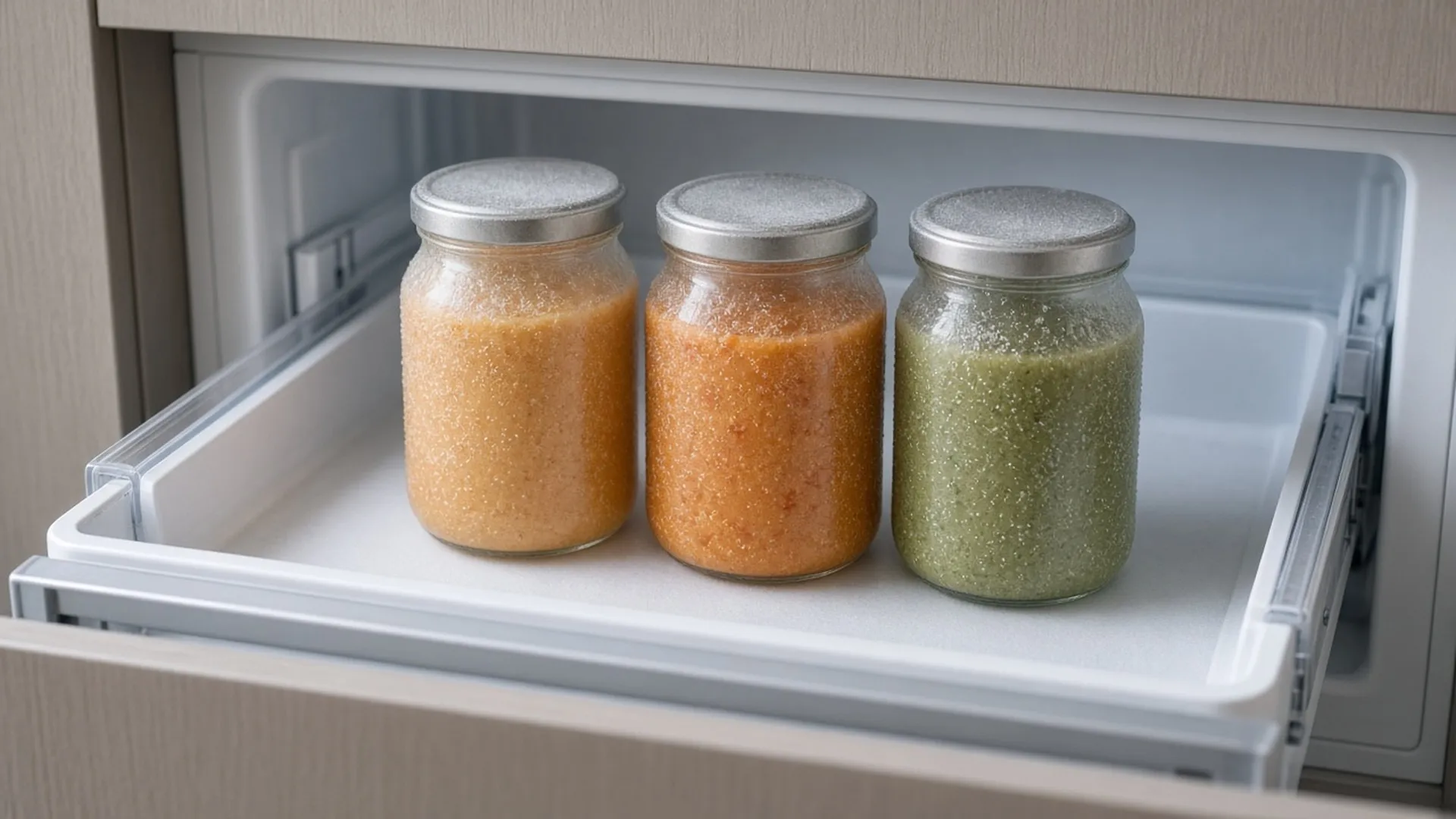
Freezing food in glass
Glass can work in the freezer when the container is designed for it and you leave room for food to expand.
Disclosure: We may earn a commission if you buy through links on this page. It does not change what we recommend. Affiliate Disclosure
Check the maker first
Only freeze glass the maker says can go in the freezer. "Freezer safe" is a maker's description, so look for it in the instructions.
Not every jar is made for freezing
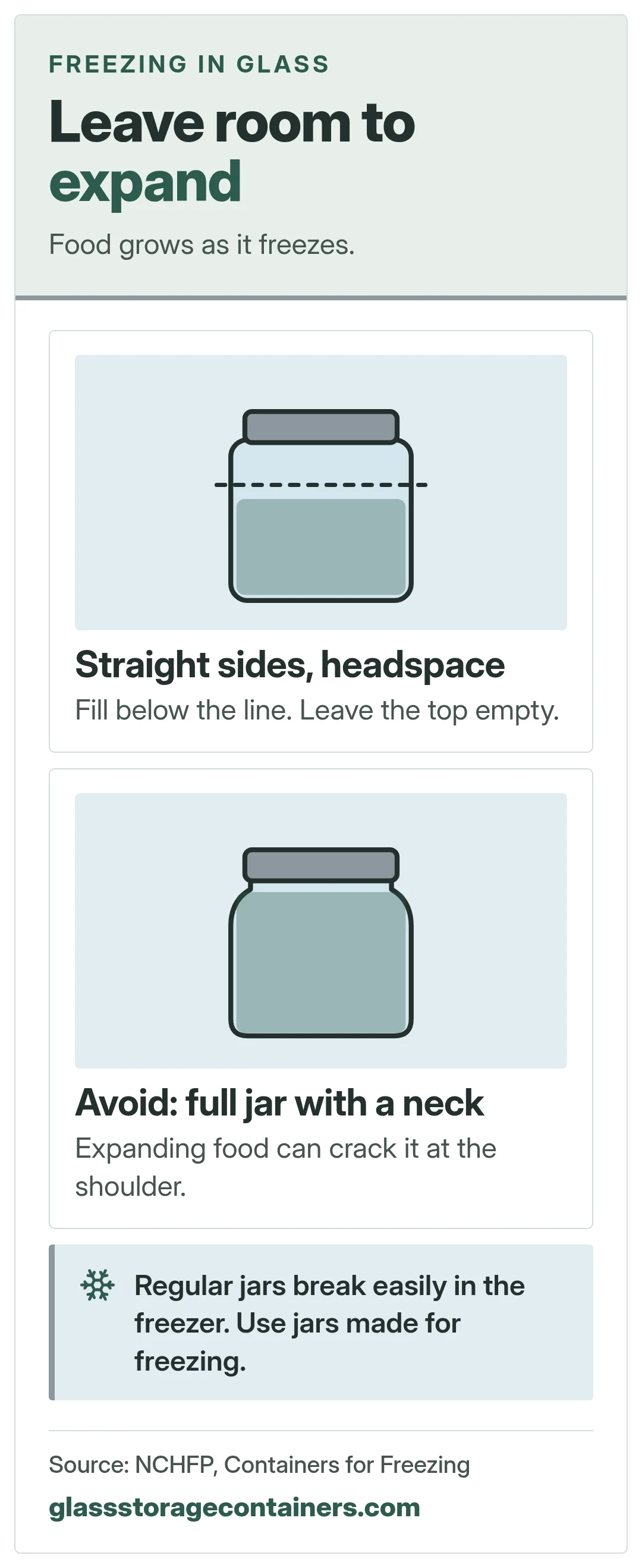
The National Center for Home Food Preservation says regular glass jars break easily at freezer temperatures. It advises wide mouth jars made for both canning and freezing, which are tempered for temperature extremes.
Leave headspace
Food expands as it freezes. Leave empty space at the top, called headspace, so the food has room. Narrow-necked jars need extra headspace because expansion can break them at the neck. Some jars have a freezer fill line.
Straight sides help
NCHFP notes that straight sides make frozen food much easier to get out.
Cool first, then freeze
USDA advises cooling food quickly in shallow containers and refrigerating or freezing it within 2 hours of cooking. Avoid moving a container straight from a hot oven to the freezer. See the thermal shock guide.
Thawing
USDA lists three safe ways to thaw leftovers: in the refrigerator, in cold water, and in the microwave. Do not move glass straight from the freezer into a hot oven unless the maker says you can.
How long frozen food keeps
FDA says food kept at 0 °F stays safe indefinitely, but quality declines over time. USDA suggests frozen leftovers are best within 3 to 4 months.
FAQ
General information only. Follow the maker's instructions for oven, microwave, freezer, and dishwasher use. Glass can crack or break from sudden temperature changes or impact. For food safety, follow USDA and FDA guidance.
Related guides
Why glass cracks
Thermal shock explained.
