
Thermal shock in glass
Sudden temperature changes can crack glass. Here is why, and what to avoid.
Disclosure: We may earn a commission if you buy through links on this page. It does not change what we recommend. Affiliate Disclosure
What it is
When one part of a piece of glass heats or cools much faster than another, it expands or contracts unevenly. That stress can crack the glass. This is called thermal shock.
Glass type matters, but only so far
Borosilicate glass expands less with heat, so it is generally more resistant to thermal shock than ordinary soda-lime glass. It can still crack.
Common triggers
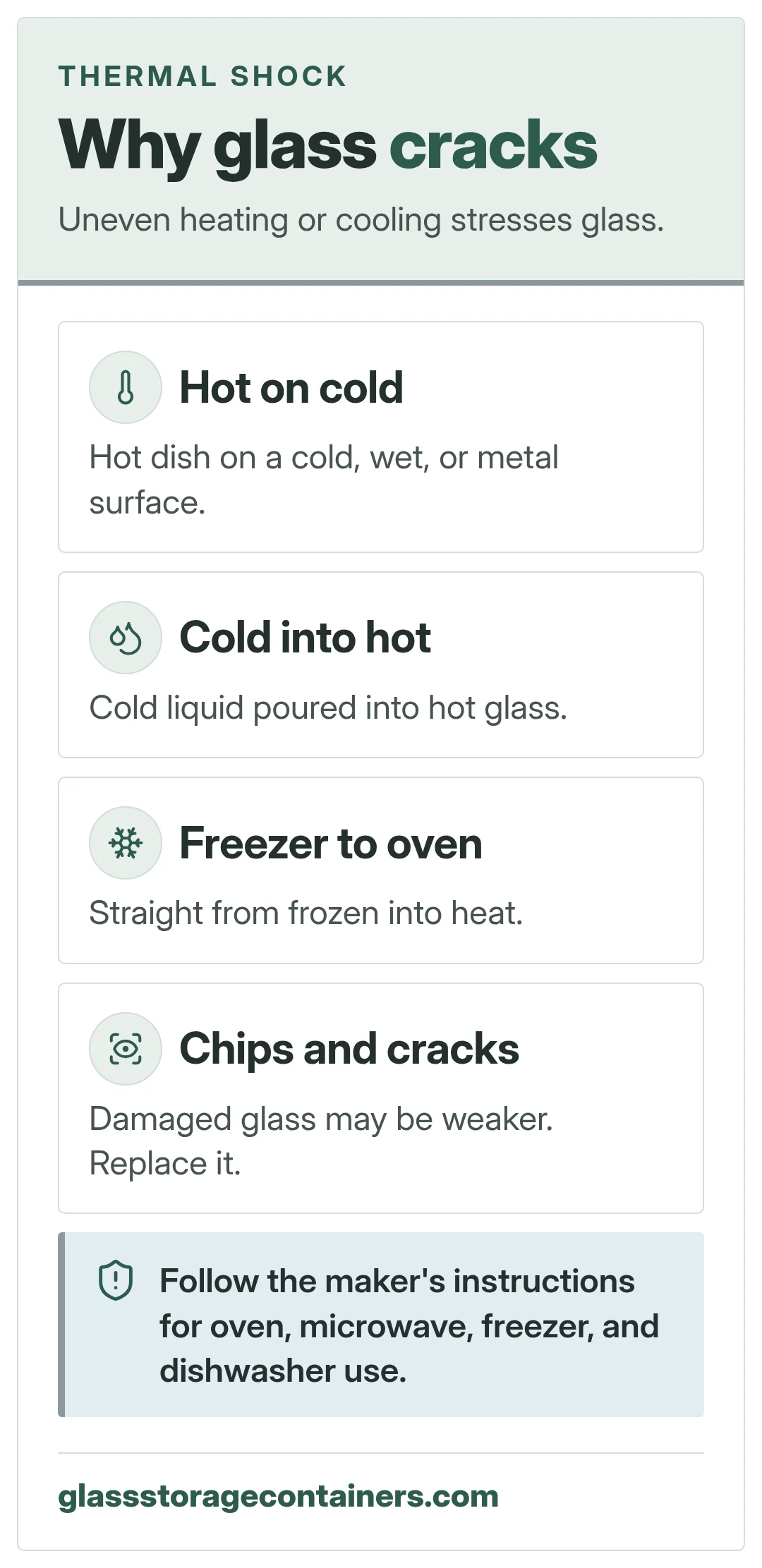
- Hot glass set on a cold, wet, or metal surface.
- Cold liquid poured into hot glass.
- Glass moved straight from the freezer to the oven.
- Hot food sealed and put straight into the freezer.
Habits that help
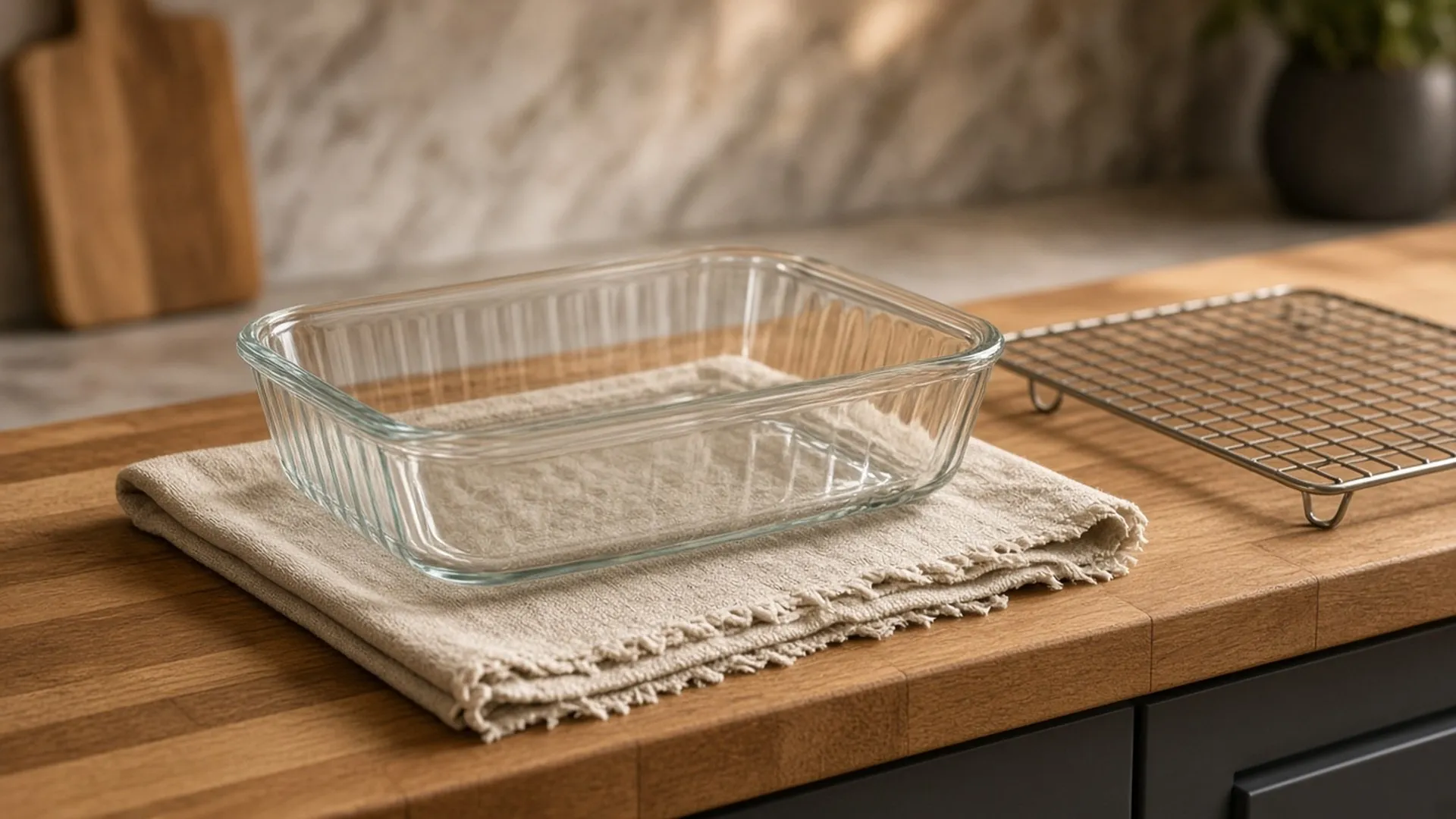
- Let hot glass rest on a dry towel or trivet.
- Thaw in the refrigerator before heating, as USDA lists among safe thawing methods.
- Follow the maker's instructions for temperature changes.
- Replace glass that is chipped or cracked.
FAQ
General information only. Follow the maker's instructions for oven, microwave, freezer, and dishwasher use. Glass can crack or break from sudden temperature changes or impact. For food safety, follow USDA and FDA guidance.
Related guides
Keep them clean
Dishwasher, stains, and odors.
