
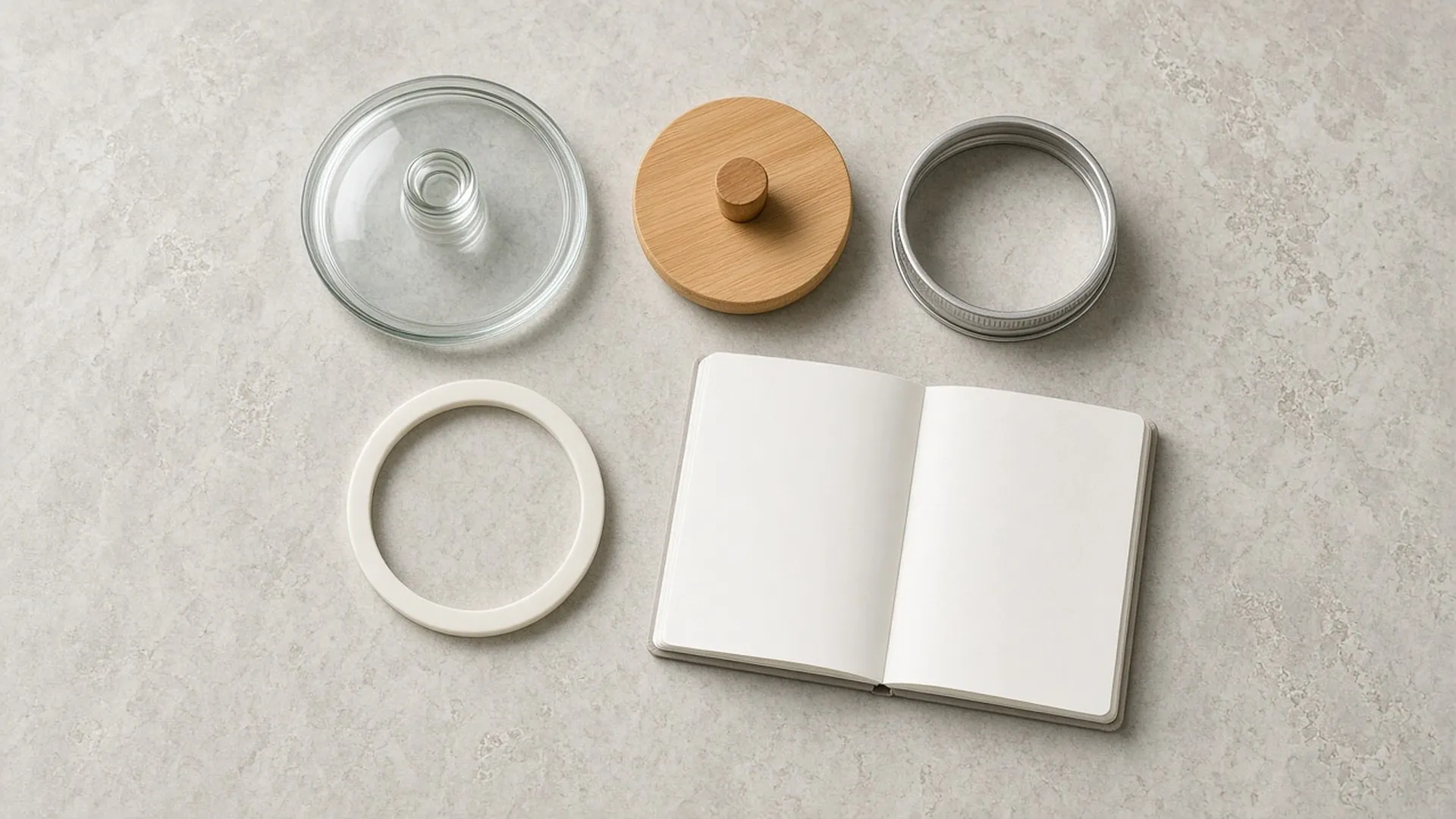
Glass storage glossary
The words on the box, each in a sentence.
Disclosure: We may earn a commission if you buy through links on this page. It does not change what we recommend. Affiliate Disclosure
Glass
The most common everyday glass.
Glass with boron oxide that expands less with heat.
Glass heat treated to make it stronger. It can still crack or break.
Cracking caused by sudden, uneven temperature change.
Lids and seals
A lid with locking tabs.
A silicone ring that helps a lid seal.
A small opening to let steam escape.
Storage
Empty space left at the top so food can expand when frozen.
A jar made for both canning and freezing.
Moving dry goods into your own containers.
Label terms (maker descriptions)
The maker's statement of intended use. Follow its instructions.
The maker's description of the seal.
General information only. Follow the maker's instructions for oven, microwave, freezer, and dishwasher use. Glass can crack or break from sudden temperature changes or impact. For food safety, follow USDA and FDA guidance.
Related guides
Back to the start
The two kinds of glass.
